
The CIRCUIT Newsletter is here!
Ever since the CIRCUIT project officially began, we have been eagerly anticipating the release of our very first newsletter!
At last, we are excited to present our first issue, which you can read online or download directly through our Zenodo community.
Dive into the pages to explore the core of CIRCUIT, from the project’s objectives and mission to the voices of the partners driving the project forward. Catch up on our latest news and activities and get a sneak peek at what is coming next.
Whether you are a researcher, industry expert, policymaker, or citizen passionate about the green transition and circularity actions, this newsletter is your window into the future of European urban-industrial resilience.
We don’t want to spoil more, so click here to read it.
This is just the first edition. We'll launch a new issue every three months to keep you up to date on our journey and latest developments.
Don’t miss an update! Subscribe today to receive the next issue straight to your feed or mailbox!
Subscribe via email & on LinkedIn

Decoding CIRCUIT: Vision, Mission & our Blueprint for change
The CIRCUIT project began its journey with a clear mission: To support industrial and urban ecosystems in successfully transitioning toward more circular, climate-neutral and zero-waste models. This transition will be supported with the integration of advanced digital tools, collaborative governance, and participatory methodologies.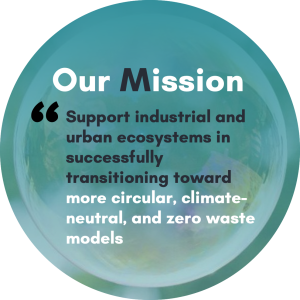
But how? CIRCUIT will bring together public authorities, industry representatives, experts and local communities. Their collaboration and involvement in the project will lead to improved decision-making, optimise resource management, and foster long-term environmental and social resilience.
With our mission as our compass and an integrated systemic approach as our collaborative framework, we are building a blueprint for change to achieve true industrial-urban symbiosis.
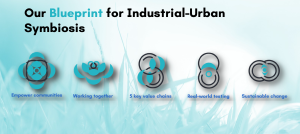
- Community Empowerment: We aim to educate people to shift their habits, build new skills and connect them with the funding and incentives needed to make sustainable decisions, especially on protecting vulnerable communities.
- Working together: We're bringing communities and stakeholders together to brainstorm, identify roadblocks, and co-create solutions to go green and reduce carbon footprints.
- Tackling 5 key value chains using smart technology: We are rolling out innovative tools to improve sustainability in construction, food, water & nutrients, vehicles & batteries, and textiles.
- Real-world testing: We are testing our community-designed ideas in real industrial sites across cities, rural areas, and islands while monitoring what works best.
- Create sustainable change: To sustain our impact, we are transforming our results into long-term business models, action plans, and policy guidelines to shape a more sustainable future.
But if you are wondering why we are doing all this, the answer lies in our vision. CIRCUIT envisions a future where ecosystems function as one, with industries and the cities around them operating in sync to cut waste, reduce emissions, and pool resources together. Change comes from everyone, from plant operators to residents, equipped with the digital tools, data, and support they need to act sustainably. And balance is restored as innovation, sustainability, and human wellbeing come together to build regions that are climate-neutral, resource-smart, and inclusive, designed to last across Europe's diverse cities.
Stay tuned, follow us on LinkedIn, Bluesky, and YouTube and subscribe to our newsletter!
Decoding CIRCUIT: Beyond the buzzwords of our project's DNA
If you take a closer look at the heart of the CIRCUIT project, you will see a mosaic of 4 interconnected pillars. Decarbonization, Circularity, Climate-Neutrality, and Sustainability. These principles are shaping how we think about the future of industrial-urban symbiosis, driving us to build regions that are circular, sustainable and climate-neutral. But what do these terms actually mean? And, more importantly, how are they embedded in CIRCUIT’s framework and mission?
We will start with one of the most important pieces of the puzzle: decarbonisation. Decarbonisation is both a method of climate change mitigation and the process of significantly reducing or eliminating carbon dioxide (CO2) and other greenhouse gas (GHG) emissions from the atmosphere. Think of it as turning down the carbon tap: the less greenhouse gases we release into the atmosphere, the closer we get to a climate-neutral future. True industrial sustainability cannot be achieved without shifting away from fossil fuels, which is why decarbonisation is at the core of the CIRCUIT project.
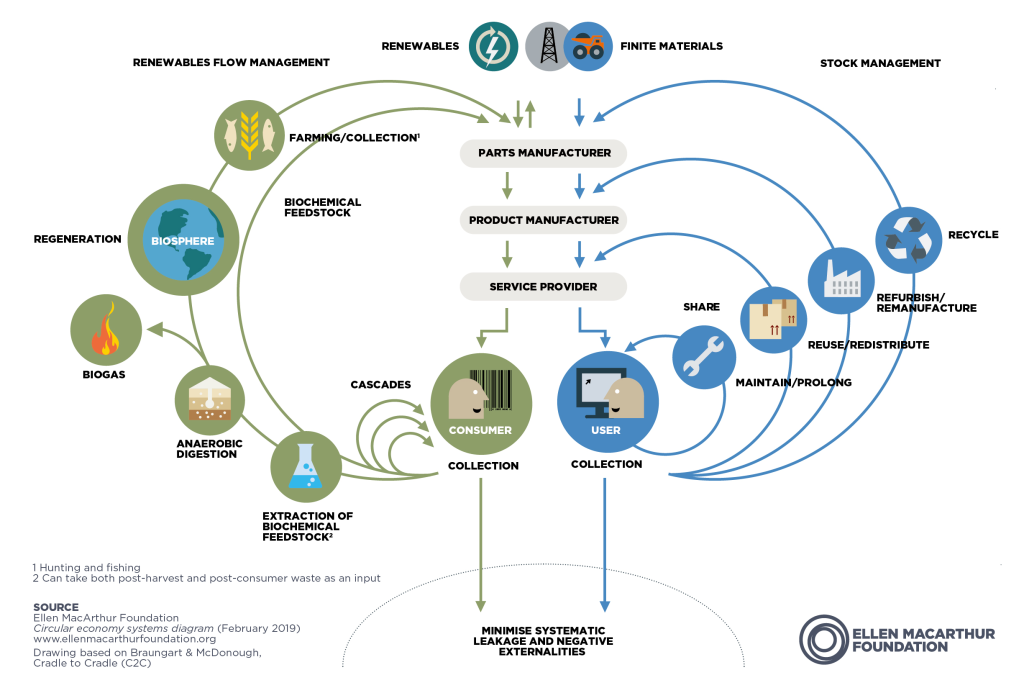
Let’s continue with circularity.
According to the United Nations Environment Programme (UNEP), “circularity is more than a sustainability buzzword—it’s a transformative systems approach that redefines how we produce, consume, and manage resources. At its core, circularity challenges the traditional linear model of “take-make-waste,” replacing it with regenerative cycles that retain value, minimise waste, and restore ecosystems”. In a nutshell, circularity is about reusing, repairing, and getting the most use out of products instead of discarding them. A simple example? Instead of demolishing an old house, we renovate it.
And what about climate-neutrality?
According to the European Council, “Climate neutrality is about emitting less and absorbing more”. In simple terms, climate neutrality means reducing emissions through climate actions, ensuring no adverse effects on the climate system. Have you ever searched for a flight and noticed a green "lower emissions" label next to some options? That's climate-neutrality thinking translated into a real, everyday decision. Travel platforms calculate and compare the estimated CO2 emissions of each flight based on factors like aircraft type, age, and cabin class and flag the options that pollute less. It doesn't offset the emissions on its own, but it makes an invisible impact visible, giving us the information to factor climate impact into our choices alongside price and duration.
And we will wrap up with sustainability. In 1987, the United Nations Brundtland Commission defined sustainability as “meeting the needs of the present without compromising the ability of future generations to meet their own needs. So, in a nutshell, sustainability involves protecting ecosystems, conserving resources and creating a healthy world for future generations.
And here comes the CIRCUIT project. During the three years of its implementation, CIRCUIT will assist in transitioning towards a sustainable, circular and climate-neutral future through innovative governance, digital tools, and participatory methodologies.
Stay tuned, follow us on LinkedIn, Bluesky, and YouTube and subscribe to our newsletter!