
Decoding CIRCUIT: Meet the 32 partners assembling the puzzle
Every transformation starts with a piece. Imagine a puzzle with 32 distinct pieces, each with its own shape, colour, and place. Individually, they tell only part of the story. But when connected, they reveal a much bigger picture, the transition toward climate-neutral and sustainable cities.
This transformation requires much more than just research and innovative tools. It requires fresh ideas, practical solutions, diverse areas of expertise and, above all, collaboration. By bringing together 32 partners across 12 European countries, the CIRCUIT project unites collective knowledge and experience to explore how this transformation can become a reality.
From cutting-edge research to on-the-ground action, every partner brings a vital piece to the puzzle. And together, we are building a comprehensive understanding of the challenges and opportunities ahead.
Putting the pieces together: the partners powering CIRCUIT
To better understand the diversity of expertise within our consortium, the partners are grouped into six categories. Each represents a unique area of knowledge and action, highlighting how complementary skills and perspectives come together to support the CIRCUIT vision.
10 Academic and research institutions driving the science, data, and methodological frameworks
 Automotive Technology Centre ofGalicia: “Participating in CIRCUIT is a great opportunity for CTAG to help drive the transition toward more circular and sustainable industrial ecosystems through innovation and advanced materials research.”
 University of Maribor: “University of Maribor is contributing its scientific excellence and advanced digital infrastructure to the joint European effort to couple circularity and decarbonisation in industrial–urban ecosystems.”
 RISE Research Institutes of Sweden: “RISE will act as the project manager for the Umeå case. We look forward to demonstrating industrial symbiosis by utilising waste heat and biogenic residual streams to create circular and sustainable local fish and shrimp production systems.”
 University of Thessaly: “We look forward to advancing knowledge and practice in integrating circularity and decarbonization strategies within territories facing accumulated environmental and socio-economic pressures, while facilitating the transfer of innovative solutions and policy approaches to other territories and contexts.”
 Trinity College Dublin: “At Trinity College Dublin, we are excited to collaborate with partners in research, local government and industry from across Europe in upscaling decarbonisation and circularity activities to enable urban regions to transition toward sustainable, circular and climate-neutral ecosystems.”
 Centre for Research and Technology Hellas: “CERTH is looking forward to working closely with CIRCUIT partners to deploy and validate innovative solutions in real-world environments, creating a robust foundation for large-scale replication and lasting impact across European cities and regions.”
 University of Western Macedonia: “As an academic partner, UOWM will act as the project's Data Manager, overseeing data management policies and procedures throughout the project lifecycle.”
 VTT Technical Research Centre of Finland Ltd: “We are looking forward to working with the broad consortium and tackling circular economy issues across various geographies and sectors involved.”
 Vigo University: “The University of Vigo, through the Knowledge Organisation Group, plays a key role in the Galician pilot phase of the project, contributing the perspective of the social sciences and humanities (SSH) to drive the transition towards more sustainable and circular models in peri-urban industrial areas.”
 University of Umea: “We are looking forward to networking and industrial symbiosis.”
10 Municipalities, regional authorities & development agencies serving as testing grounds advancing innovation through real territorial needs
 Regional Development Fund of Western Macedonia: “Through CIRCUIT, RDF aims to support the transition of Western Macedonia towards a more sustainable and circular regional economy by connecting innovation, territorial development, and real local needs.”
 City of Umeå: “The Swedish cluster is looking forward to collaborating with EU partners in the CIRCUIT project to strengthen knowledge and integrate decarbonization and circularity in industrial sites, supporting climate-neutral and sustainable cities.”
 Lagoa city council – Azores: “Through the CIRCUIT project, Lagoa aims to strengthen collaboration, exchange knowledge, and contribute to innovative and sustainable solutions for more resilient communities.”
 Municipality of Maribor: “Through the CIRCUIT project, Maribor aims to strengthen the transition towards a circular and climate-neutral urban-industrial ecosystem. Our pilot activities will take place in the Tezno Industrial Zone, an important industrial area with strong potential for circular economy implementation and industrial symbiosis.”
 City of Espoo: “We are looking forward to working together with partners to advance circular construction by enabling the reuse of building components and integrating low-carbon, resource-efficient solutions into urban development.”
 Regional Science and Technology Fund: “FRCT coordinates the Azores cluster and supports the implementation of the Lagoa demonstrator, fostering stakeholder engagement and circular innovation in island territories.”
 Vigo free trade consortium: “Through CIRCUIT, we look forward to generating local impact by improving working conditions across our industrial sites through more sustainable operations, while also unlocking new entrepreneurial opportunities in the field of circularity.”
 City of Prato: “Prato joins CIRCUIT to shape a future where industrial competitiveness, circularity and climate resilience become part of one integrated urban vision.”
 Fingal county council: “Fingal is looking forward to participating in the CIRCUIT Project to learn from the experience and expertise of project partners to advance the sustainable development of the local industrial area and integrate the area with the town of Balbriggan through digital innovation and trialling new technologies.”
 IDETA territorial development agency: “Within the European CIRCUIT project, IDETA contributes through the replicator site “MC²” (Mineral Circular Center), Wallonia’s reference hub for the decarbonisation of the minerals and stone sector. MC² brings together industrial companies, research centres, universities, public authorities, and innovation stakeholders to accelerate the transition towards a low-carbon and circular economy.”
6 Industry partners & technology providers developing scalable, and data-driven solutions
 Netcompany: “Netcompany brings expertise in software integration, AI, and innovation management to CIRCUIT, driving the development of interoperable platforms and AI-powered decision support tools. We are eager to help deliver scalable, data-driven solutions that connect industrial and urban systems for a sustainable, circular future.”
 STAM: “We see CIRCUIT as a valuable opportunity to test and develop integrated approaches to industrial sustainability, linking transport planning, energy management, and stakeholder decision-making in a way that is based on real operational requirements.”
 Lotus demolition oy: “We expect to improve and streamline circular economy processes in the reuse of building components and possibly develop new operating methods.”
 Simbiente Azores - Environmental Engineering and Management, Ltd.: “Based in the Azores archipelago, Simbiente Azores is proud to bring an island and outermost-region perspective to CIRCUIT, joining a diverse European network to co-create practical circularity and decarbonisation solutions for regions with distinct challenges but a shared climate action ambition.”
 Spolia Design: “We aim to develop and pilot the production chain of reuse construction components from material mapping to next assembly. Our purpose is to organise the process that enables larger-scale reuse in the construction sector.”
 SRV construction ltd: “We look forward to collaborating with partners to drive tangible progress in the circular economy of the built environment in Finland.”
2 Utility companies managing the resources, energy flows, and practical urban services.
 Umeå energy ab: “UEAB are exploring the way to create a value-sharing digital platform that will help stakeholders in setting up viable business partnerships.”
 Public company nigrad, municipal company ltd: “Nigrad contributes practical experience as a publicly owned municipal utility and construction company operating at the local level. This enables the project to test, adapt and apply circular solutions developed within the demonstration cases of other partner cities and regions to the local context of Maribor.”
2 Non-Profit organisations & networks ensuring community integration, and open digital collaboration
 RIA foundation: “Through this project, RIA aims to demonstrate that applying the same quality-of-life and ecological standards to industrial areas as we do to our cities has a profound positive impact.”
 Open & Agile Smart Cities: “Being part of CIRCUIT is an exciting opportunity to help shape more collaborative, data-driven and human-centred approaches to circular and climate-neutral urban development. We are particularly looking forward to contributing to the collaboration processes between cities, industries and citizens, while exploring how digital tools and participatory methodologies can support more resilient, sustainable and inclusive industrial-urban ecosystems.”
2 Social innovation & communication specialists amplifying outreach and impact while ensuring social relevance, and fostering co-creation.
 AUSTRALO: “At AUSTRALO, our DNA is rooted in marketing the future. By leading CIRCUIT's outreach, our goal is to amplify the project's results and maximise its long-term impact.”
 Centre for Social Innovation: “All innovations are socially relevant: The Centre for Social Innovation works to foster co-creation processes in the CIRCUIT project, enabling mutual learning and a shared vision.”
A puzzle comes together not simply because its pieces exist, but because they fit perfectly. That collaborative synergy is our secret ingredient for CIRCUIT's success.
Stay tuned, follow us on LinkedIn, Bluesky, and YouTube and subscribe to our newsletter!


The CIRCUIT Newsletter is here!
Ever since the CIRCUIT project officially began, we have been eagerly anticipating the release of our very first newsletter!
At last, we are excited to present our first issue, which you can read online or download directly through our Zenodo community.
Dive into the pages to explore the core of CIRCUIT, from the project’s objectives and mission to the voices of the partners driving the project forward. Catch up on our latest news and activities and get a sneak peek at what is coming next.
Whether you are a researcher, industry expert, policymaker, or citizen passionate about the green transition and circularity actions, this newsletter is your window into the future of European urban-industrial resilience.
We don’t want to spoil more, so click here to read it.
This is just the first edition. We'll launch a new issue every three months to keep you up to date on our journey and latest developments.
Don’t miss an update! Subscribe today to receive the next issue straight to your feed or mailbox!
Subscribe via email & on LinkedIn

Decoding CIRCUIT: Vision, Mission & our Blueprint for change
The CIRCUIT project began its journey with a clear mission: To support industrial and urban ecosystems in successfully transitioning toward more circular, climate-neutral and zero-waste models. This transition will be supported with the integration of advanced digital tools, collaborative governance, and participatory methodologies.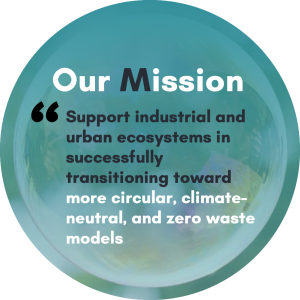
But how? CIRCUIT will bring together public authorities, industry representatives, experts and local communities. Their collaboration and involvement in the project will lead to improved decision-making, optimise resource management, and foster long-term environmental and social resilience.
With our mission as our compass and an integrated systemic approach as our collaborative framework, we are building a blueprint for change to achieve true industrial-urban symbiosis.
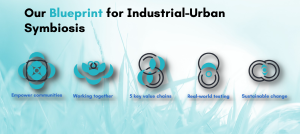
- Community Empowerment: We aim to educate people to shift their habits, build new skills and connect them with the funding and incentives needed to make sustainable decisions, especially on protecting vulnerable communities.
- Working together: We're bringing communities and stakeholders together to brainstorm, identify roadblocks, and co-create solutions to go green and reduce carbon footprints.
- Tackling 5 key value chains using smart technology: We are rolling out innovative tools to improve sustainability in construction, food, water & nutrients, vehicles & batteries, and textiles.
- Real-world testing: We are testing our community-designed ideas in real industrial sites across cities, rural areas, and islands while monitoring what works best.
- Create sustainable change: To sustain our impact, we are transforming our results into long-term business models, action plans, and policy guidelines to shape a more sustainable future.
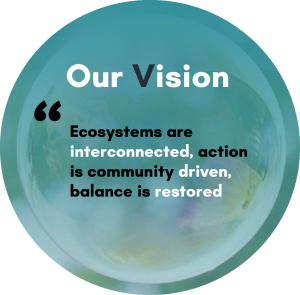
But if you are wondering why we are doing all this, the answer lies in our vision. CIRCUIT envisions a future where ecosystems function as one, with industries and the cities around them operating in sync to cut waste, reduce emissions, and pool resources together. Change comes from everyone, from plant operators to residents, equipped with the digital tools, data, and support they need to act sustainably. And balance is restored as innovation, sustainability, and human wellbeing come together to build regions that are climate-neutral, resource-smart, and inclusive, designed to last across Europe's diverse cities.
Stay tuned, follow us on LinkedIn, Bluesky, and YouTube and subscribe to our newsletter!
Decoding CIRCUIT: Beyond the buzzwords of our project's DNA
If you take a closer look at the heart of the CIRCUIT project, you will see a mosaic of 4 interconnected pillars. Decarbonization, Circularity, Climate-Neutrality, and Sustainability. These principles are shaping how we think about the future of industrial-urban symbiosis, driving us to build regions that are circular, sustainable and climate-neutral. But what do these terms actually mean? And, more importantly, how are they embedded in CIRCUIT’s framework and mission?
We will start with one of the most important pieces of the puzzle: decarbonisation. Decarbonisation is both a method of climate change mitigation and the process of significantly reducing or eliminating carbon dioxide (CO2) and other greenhouse gas (GHG) emissions from the atmosphere. Think of it as turning down the carbon tap: the less greenhouse gases we release into the atmosphere, the closer we get to a climate-neutral future. True industrial sustainability cannot be achieved without shifting away from fossil fuels, which is why decarbonisation is at the core of the CIRCUIT project.
Let’s continue with circularity.
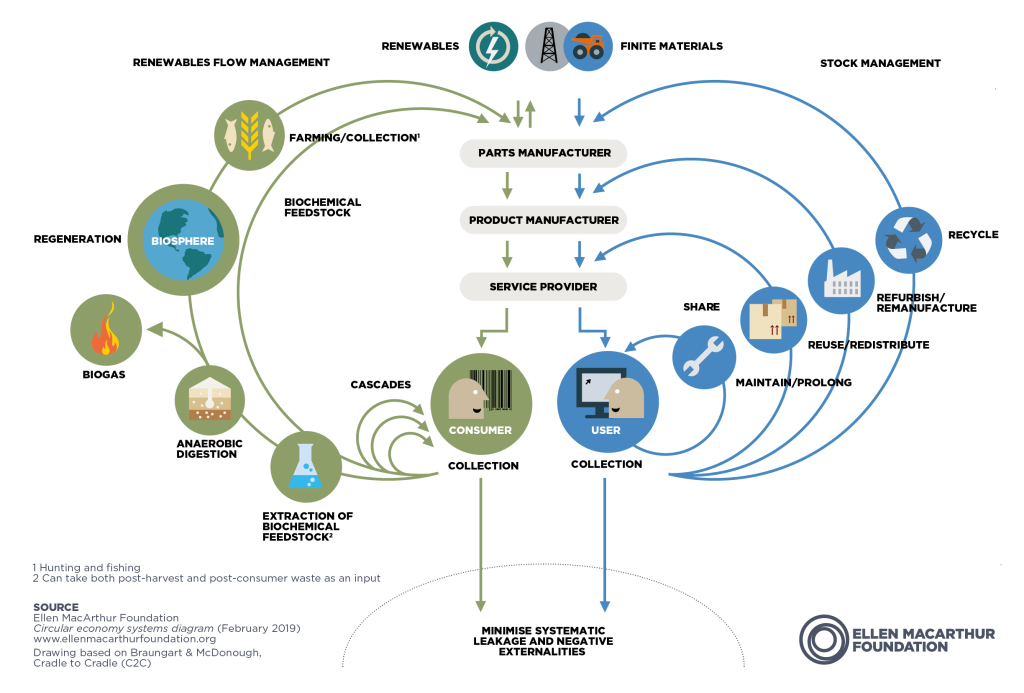
According to the United Nations Environment Programme (UNEP), “circularity is more than a sustainability buzzword—it’s a transformative systems approach that redefines how we produce, consume, and manage resources. At its core, circularity challenges the traditional linear model of “take-make-waste,” replacing it with regenerative cycles that retain value, minimise waste, and restore ecosystems”. In a nutshell, circularity is about reusing, repairing, and getting the most use out of products instead of discarding them. A simple example? Instead of demolishing an old house, we renovate it.
And what about climate-neutrality?
According to the European Council, “Climate neutrality is about emitting less and absorbing more”. In simple terms, climate neutrality means reducing emissions through climate actions, ensuring no adverse effects on the climate system. Have you ever searched for a flight and noticed a green "lower emissions" label next to some options? That's climate-neutrality thinking translated into a real, everyday decision. Travel platforms calculate and compare the estimated CO2 emissions of each flight based on factors like aircraft type, age, and cabin class and flag the options that pollute less. It doesn't offset the emissions on its own, but it makes an invisible impact visible, giving us the information to factor climate impact into our choices alongside price and duration.
And we will wrap up with sustainability. In 1987, the United Nations Brundtland Commission defined sustainability as “meeting the needs of the present without compromising the ability of future generations to meet their own needs. So, in a nutshell, sustainability involves protecting ecosystems, conserving resources and creating a healthy world for future generations.
And here comes the CIRCUIT project. During the three years of its implementation, CIRCUIT will assist in transitioning towards a sustainable, circular and climate-neutral future through innovative governance, digital tools, and participatory methodologies.
Stay tuned, follow us on LinkedIn, Bluesky, and YouTube and subscribe to our newsletter!
Decoding CIRCUIT: The Story Behind our Acronym & Logo
Every great initiative begins with a vision. In the landscape of European research and innovation, this core vision is often perfectly encapsulated in a single, memorable word. For our Horizon Europe project, that word is our acronym: CIRCUIT. A strong acronym acts as the project's foundational brand identity; it captures complex scientific objectives in a concise form, helping the consortium to communicate its purpose to stakeholders, policymakers and civil society.
But what exactly does CIRCUIT mean, and how did this name come to life?
When our consortium first gathered to design this project, we knew our goal was deeply interconnected: transforming industrial environments to directly benefit the urban areas that surround them. We needed a name that reflected continuous flow, connection, and systemic transformation.
The result is an acronym that serves as the blueprint for our entire methodology. CIRCUIT stands for: Integrating deCarbonization and cIRcularity actions in industrial sites to achieve Climate-neUtral and sustaInable ciTies.
The DNA of our name
- Decarbonization & Circularity: These are the twin pillars of our technical approach. True industrial sustainability cannot be achieved without shifting away from fossil fuels (decarbonization) while simultaneously eliminating waste through regenerative resource cycles (circularity).
- Climate-Neutrality: This represents our primary environmental target. By modernising and upgrading industrial sites, we are actively contributing to the European Green Deal’s ambitious goal of reaching climate neutrality.
- Sustainable Cities: Industries do not operate in isolation. By making industrial hubs cleaner and more efficient, we directly improve the health, resilience and quality of life of the cities and communities around them.
The visual identity behind our logo
Just as our name reflects continuous flow, so does our logo. The design is built around overlapping circular paths that symbolise the dynamic relationship between industrial hubs and urban environments. Look closely, and you’ll notice that the darker arcs subtly form a “C” for CIRCUIT. Where these paths intersect with vibrant green circles, they represent a moment of transformation, the shift from linear processes to a sustainable, circular system. Through its blend of green tones that highlight sustainability and darker shades that convey a sense of technological grounding, the logo portrays CIRCUIT as a living, evolving ecosystem. Interested in our visuals? Discover the CIRCUIT brandbook here!
More than an acronym and a logo, our guiding loop
Ultimately, CIRCUIT is more than just a clever arrangement of letters or a circular design. They reflect the unbroken loop of innovation, industry, and urban planning that drive our work. Through this integrated approach, we aim to support Europe’s transition toward sustainable, circular, and climate‑neutral ecosystems.
And we are just at the beginning of our journey! Through dedicated blog articles, we will dive into each tool, innovation and activity that brings the CIRCUIT vision to life.
Stay tuned, follow us on LinkedIn, Bluesky, and YouTube and subscribe to our newsletter!

CIRCUIT VOICES! Putting People at the Centre of the Green Transition
During our Kick-off meeting, we had the opportunity to discuss with Pamela Bartar, a Senior Researcher and Leading Manager, and Daniela Fuchs, a Senior Researcher, at the Centre for Social Innovation, Vienna (ZSI GmbH).
Describe CIRCUIT in three words
Collaboration, Mutual Learning and Transformation
Beyond the tech, why is the human element so crucial for the transition to climate neutrality?
Technology can support our lifestyle, but it does not design it. In the end, it is up to us which kinds of practices we adopt and which kinds of solutions we build into our routines to actually move towards climate neutrality and greater sustainability.
What does co-creation actually look like in practice?
Co-creation in CIRCUIT means bringing diverse stakeholders to the same table. This includes residents, city authorities, researchers, entrepreneurs and innovators. They all have the aim to jointly design solutions that reflect real needs and local realities.
What are the CIRCUIT Impact Cafés and why are they a crucial milestone?
The CIRCUIT Impact Cafés are temporary interactive spaces designed for the eight clusters, enabling dialogue, mutual learning and co-design. They help connect knowledge with action, ensuring that the project results can create lasting impact in communities across Europe.
Watch the video interview here!
CIRCUIT VOICES! Meet the Project Coordinator
During our Kick-off meeting, we had the opportunity to discuss with Apostolos Apostolaras. Apostolos is a senior researcher at CERTH, whereas CERTH is also the project’s coordinator.
Describe CIRCUIT in three words
Co-Creation, Circularity and Scalability
What inspired the idea behind CIRCUIT?
The idea behind CIRCUIT stems from the need to bridge the gap between industrial sites and regional cities and connect them towards sustainable development.
What core challenge is CIRCUIT tackling?
CIRCUIT aims to deliver a replicable and scalable solution that can be modified and adopted across diversified use cases and pilot sites.
What’s the one thing that truly sets CIRCUIT apart?
What sets CIRCUIT apart is its systemic approach, where stakeholders are engaged in the deployment of the solutions. It is not only about the technical innovations that CIRCUIT brings, but also about the adaptation of these solutions, which is co-designed to fulfil the requirements of the involved actors.
How do you see your organisation contributing to CIRCUIT's goals?
CERTH, in addition to being the project coordinator, will bring its specific scientific expertise to deliver operational data spaces and support the pilot deployments of all technical solutions.
Watch the video interview here!
CIRCUIT VOICES! Meet the Technical coordinator
During our Kick-off meeting, we had the opportunity to discuss with Dora Papatheochari. Dora is an Assistant Professor at the Department of Planning and Regional Development at the University of Thessaly and the technical coordinator of the CIRCUIT project.
Describe CIRCUIT in three words
Circularity, Climate Neutrality, and Urban Industrial Symbiosis
What’s the scientific vision behind CIRCUIT?
To identify the gaps, needs and priorities of the cities involved in the project, while clearly defining the ecosystems in which they operate. This involves looking at these ecosystems from both a territorial and a governance perspective. On the territorial side, it means identifying the dynamics and interdependencies within each territory. From a governance perspective, it means involving all relevant stakeholders and accelerating their role in this transition.
In your view, what is the ultimate catalyst for climate neutrality?
The ultimate catalyst is the creation of inclusive, collaborative processes that involve all relevant stakeholders. This can help create a solid stakeholder system, increase capacities, and develop a common understanding and knowledge around circularity and decarbonisation.
As the project’s technical leader, what are your top two priorities in the project’s first months?
Accelerate the integration of circular economy and climate-neutrality principles and practices into local visions and contexts, as well as into existing value chains. At the same time, CIRCUIT aims to generate knowledge on how cities can overcome barriers towards climate neutrality.
Watch the video interview and learn more!

CIRCUIT Press Release #1
Our first Press Release has been launched, introducing the CIRCUIT project and its mission to support the transition towards circular, climate-neutral industrial and urban regions across Europe.
It also includes key highlights from the project's Kick-off meeting, held from the 8th to the 9th of July, 2026, in Thessaloniki, Greece.